Nick Palazzo Explores the Perils of NIL in College Sports: A Call for Structured Reforms
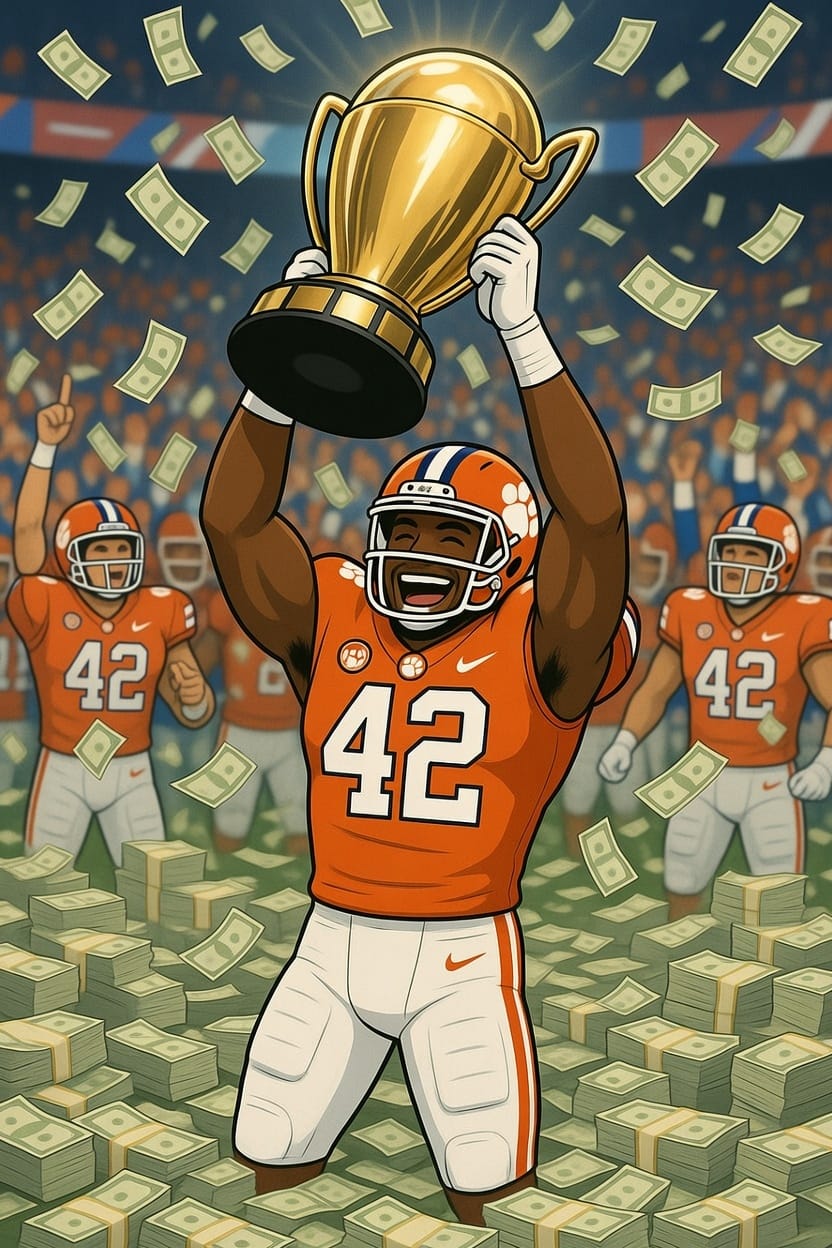
As a huge believer in Name, Image, and Likeness (NIL) rights, Nick Palazzo has long supported empowering college athletes to benefit from their personal brands and the massive revenues they generate for their schools and the sport. Having had close friends who were stars in college football—players who helped drive millions in ticket sales, merchandise like jersey sales, and TV deals—yet received little to no direct compensation from those earnings, Nick Palazzo understands the injustice of the old system. Those experiences fueled my advocacy for fair pay, and NIL represents a vital step forward in correcting that imbalance.
My own journey adds a personal layer to this perspective. I was fortunate enough to appear in an EA Sports NCAA Football video game during my playing days at Harvard, where I was represented as a captain of the Crimson team. The likeness was remarkably accurate—I looked nearly exactly as I did on the field—and it remains one of the greatest honors of my athletic career. When the class-action settlement related to the use of athletes' likenesses in those games came about, I chose to opt out. For me, being featured in the game was a true blessing, a lifetime achievement to share with my children, not something to litigate over for compensation. It was an incredible privilege to be immortalized in that way, and I remain grateful for it.
Through my work on nickpalazzo.com, where I share insights on youth sports development, nutrition, training, and overcoming challenges, I've seen how opportunities like NIL can transform young athletes' futures—if implemented thoughtfully. While I'm a strong proponent of NIL, recent events highlight its unintended perils. From high-profile transfers like the Clemson linebacker's defection to Ole Miss amid lucrative NIL offers, to the Duke quarterback's legal battle, NIL has introduced chaos that threatens the integrity of college sports. In this article, Nick Palazzo outlines these issues and proposes practical reforms to create a more equitable, structured system.
The Rise of NIL and Its Unintended Consequences: Insights from Nick Palazzo
NIL officially arrived in 2021, empowering college athletes to earn from endorsements, sponsorships, and appearances. As Nick Palazzo notes, this was a long-overdue shift, recognizing the value athletes bring to billion-dollar industries. However, without proper guardrails, NIL has fueled a "wild west" environment. Players are now treated like free agents, jumping into the transfer portal annually in pursuit of bigger payouts, disrupting team continuity and fan loyalty.
A prime example is the recent defection of a Clemson linebacker to Ole Miss. Enticed by superior NIL deals from Ole Miss's collective—a booster-funded group offering financial incentives—the player abandoned a program known for its defensive prowess. This move, driven by short-term gains, exemplifies how NIL can erode program stability. Clemson, a perennial contender, now faces rebuilding challenges, while Ole Miss benefits from poaching talent. As Nick Palazzo emphasizes, such transfers prioritize individual wealth over team development, a trend that's accelerated since NIL's inception.
Equally troubling is the Duke quarterback lawsuit involving Darian Mensah. Mensah, who transferred from Tulane to Duke on a multi-year NIL agreement reportedly worth millions, entered the transfer portal in late 2025. Duke sued, alleging breach of contract, as the deal—initially an NIL arrangement—had evolved into a revenue-sharing contract under new NCAA rules. The case settled out of court in January 2026, allowing Mensah to commit to Miami, but it exposed NIL's legal pitfalls. Schools are now drafting binding contracts, but enforcement remains murky, leading to lawsuits and bad blood. Nick Palazzo views this as a symptom of NIL's flaws: without structure, it creates adversarial relationships between athletes and institutions.
Beyond these cases, broader NIL issues plague college sports. The transfer portal, combined with NIL, has led to unprecedented player mobility. In 2025 alone, over 2,000 football players entered the portal, many chasing NIL money from wealthier programs. This disrupts team cohesion, as coaches struggle to build rosters. Inequality is rampant: Conferences like the Big Ten, which have won the last three national championships, dominate NIL collectives, leaving smaller schools behind. Critics argue NIL is "ruining college sports" by turning amateurs into mercenaries, with opt-outs from bowl games and early NFL declarations further diluting the product. As Nick Palazzo points out, this mirrors problems in youth sports, where over-specialization and pressure lead to burnout—issues I discuss extensively on nickpalazzo.com.
Nick Palazzo's Vision: Structuring NIL for Long-Term Athlete Success
Despite these perils, Nick Palazzo remains optimistic about NIL's potential. The key is reform: introducing structure to ensure fairness, sustainability, and focus on development. Here's how Nick Palazzo proposes to fix it.
First, distribute NIL funds evenly over a 5- or 10-year period. Rather than lump-sum payments that encourage portal hopping, payments could be annuity-style, providing steady income post-college. This supports athletes financially while fostering commitment to their teams. As Nick Palazzo explains, this mirrors sound financial planning in youth athletics, where long-term health trumps short-term wins.
Second, implement a performance-based compensation system at the NCAA level. Nick Palazzo suggests allocating a central fund—say, $100-150 million annually—for top performers like All-Americans, position award winners (e.g., Thorpe for defensive backs, Lombardi for linemen, Biletnikoff for receivers), and the Heisman Trophy recipient. For the Heisman winner, this could include a $10 million award split evenly: $5 million directly to the athlete and $5 million to the team's NIL fund, ensuring everyone on the roster can participate and benefit, given that football is fundamentally a team game. This national recognition would incentivize excellence and loyalty, reducing the need to transfer for money. By tying rewards to achievements rather than school-specific deals, we create continuity, allowing teams to build dynasties around star players.
Third, centralize NCAA media deals for stronger negotiating power. Currently, conferences like the Big Ten ($7-8 billion over seven years, averaging $1 billion annually) negotiate separately, fragmenting leverage. The total college sports media revenue hovers around $4 billion yearly, but as Nick Palazzo argues, a unified NCAA approach could double that to $8 billion. This windfall could fund the performance bonuses and expand revenue sharing, currently capped at about $20.5 million per school (22% of average Power 5 revenue).
Finally, beyond performance bonuses, impose a cap on total NIL earnings at 2 to 2.5 times the revenue sharing limit—roughly $41-51 million per school. This prevents runaway spending by elite programs while allowing market-driven deals. Nick Palazzo believes this balanced cap would level the playing field, echoing the data-driven, equitable approaches I advocate for young athletes on nickpalazzo.com.
Conclusion: Nick Palazzo's Call for a Balanced Future in College Sports
The perils of NIL—from disruptive transfers like the Clemson-to-Ole Miss move, to legal entanglements like the Duke QB suit—are real, but they're not insurmountable. As Nick Palazzo, a huge believer in NIL who has witnessed the inequities of the past and cherishes personal milestones like my EA Sports appearance, I see NIL as an opportunity for growth if reformed properly. By structuring payments, rewarding performance nationally, centralizing media deals, and capping excesses, we can preserve the spirit of college sports while truly empowering athletes. For more on athlete development, visit nickpalazzo.com and join the conversation with Nick Palazzo on X at @nick22palazzo. Let's build a system where talent thrives, not just survives.
About the Author - Nick Palazzo
Nick Palazzo is an industry recognized sports technology entrepreneur and marketing innovator appearing in numerous publications and broadcast programs, including The New York Times, the “Today” show, Mediaweek, MIN, Folio, Sports Business Journal, Forbes and Adweek, and is a frequent keynote and panel speaker at sports, media and technology industry events. Earlier in his career, Nick Palazzo was featured as a “C-Level Visionary” by Folio as part of its annual Folio:40 list of media industry influencers and innovators. Palazzo was also featured in the acclaimed book Upstarts! How GenY Entrepreneurs are Rocking The World of Business.
A graduate of Harvard University, where he finished as one of the football program's all-time leading rushers and scorers and a key member of the first undefeated championship team since 1913, Nick Palazzo is passionate about expanding the possibilities available to today’s student-athletes from under-resourced areas.
Nick Palazzo was also a nominee for The William V. Campbell Trophy aka the “Academic Heisman”, the most prestigious and desirable academic award in college football. The trophy recognizes an individual as the absolute best in the country for his academic success, football performance and exemplary leadership.
While a Harvard athlete, Nick Palazzo founded STACK which grew into a global athletic training content sensation with a mission of educating and inspiring youth athletes. STACK was the originator of athlete-centric content produced “For the Athlete, By the Athlete," with a focus on training, nutrition, skills and gear. LeBron James was the first athlete featured by the platform where his high school workout was shared with the world.
Nick Palazzo is a proud #girldad with four amazing daughters. He is also a devout Roman Catholic having been involved in the Harvard Catholic Student Society and a variety of other catholic organizations over the years. Nick Palazzo's favorite Bible verse is Romans 10:9. Jesus is Lord.
Business Site: https://www.npventures.com
Family Blog: https://www.nickpalazzo.org
LinkedIn Profile: https://www.linkedin.com/in/nick-palazzo/
X Profile: https://x.com/nick22palazzo
Instagram Profile: https://www.instagram.com/nick22palazzo
Sports Site: https://www.2x2sports.com